


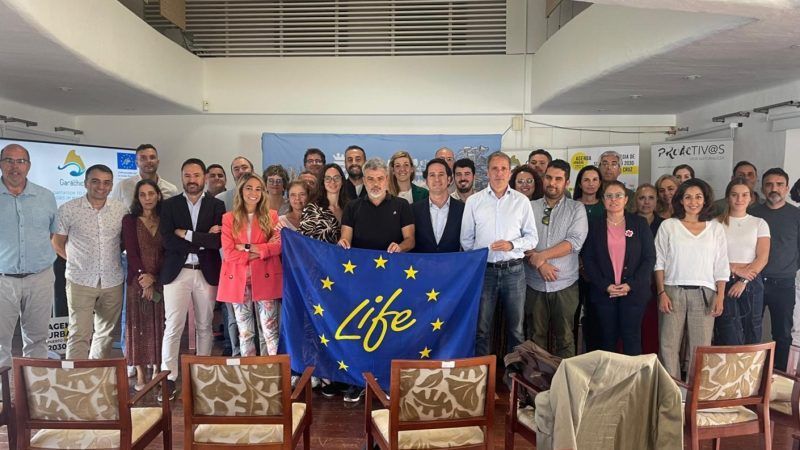
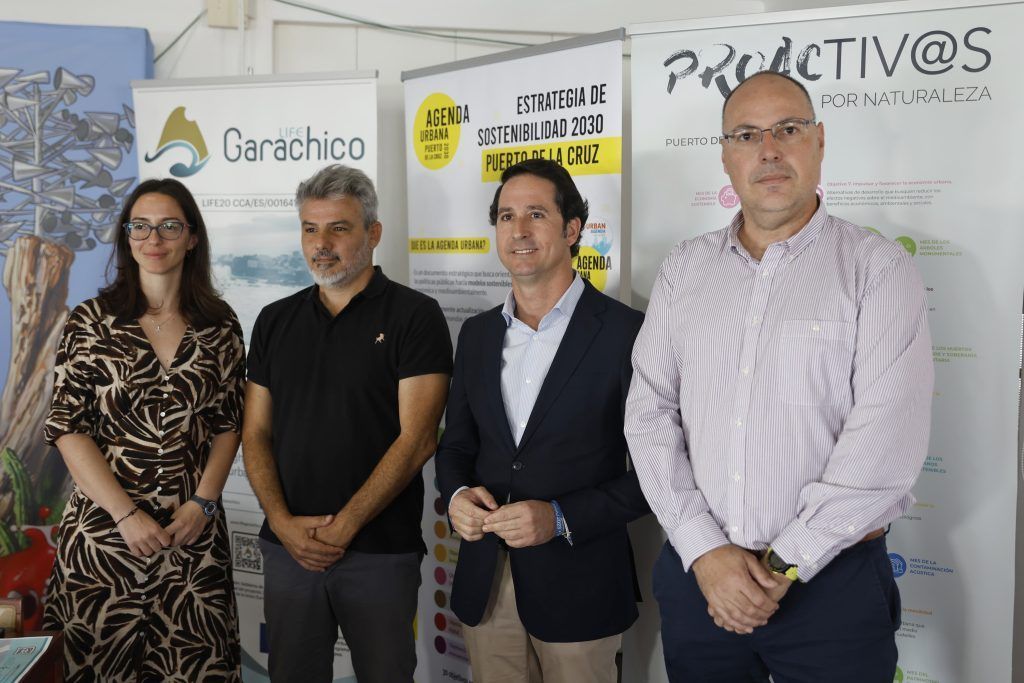
El primer workshop técnico del proyecto LIFE Garachico, titulado «Medidas de Adaptación Flexible para la Gestión de Espacios Costeros Urbanos en un Contexto de Cambio Climático», se ha llevado a cabo hoy, día 24 de abril de 2024, en la Sala Isla Martiánez, situada en el emblemático Lago Martiánez de Puerto de la Cruz. El proyecto piloto LIFE Garachico que está liderado por la Consejería de Transición Ecológica y Energía del Gobierno de Canarias y cuenta con la colaboración de diez socios, promueve la adaptación de áreas urbanas costeras de la Macaronesia ante posibles inundaciones marinas, consecuencia del cambio climático.
All this through the adoption of a series of strategies that increase the resilience of these areas against extreme coastal events, current or future.
The objective of this workshop has been to address in an interdisciplinary and applied manner the philosophy of flexible adaptation measures in coastal urban spaces in the face of climate change and explore their application for the management of these spaces, as well as present success cases where they have been began its application, generating a common vision within the framework of Macaronesia and identifying specific problems from the perspective of the attendees.
This first technical event of the project has focused on identifying the advantages and possibilities offered by flexible adaptation measures, as well as on the identification of the key actors who will take an active part in the regional platform for decision-making. Finally, the specific case of Garachico was addressed in a general way.
The opening of the event was led by the Department of Ecological Transition and Energy of the Government of the Canary Islands and the Puerto de la Cruz City Council. In his speech, the general director of Ecological Transition and Fight against Climate Change, Ángel Montañés, pointed out the good results that the project is having, “a pioneer in the fight against climate change on the islands” and that seeks, “not only the adaptation of the territory but also of the people who live in it, guaranteeing their safety in the face of events that will become more and more frequent.”
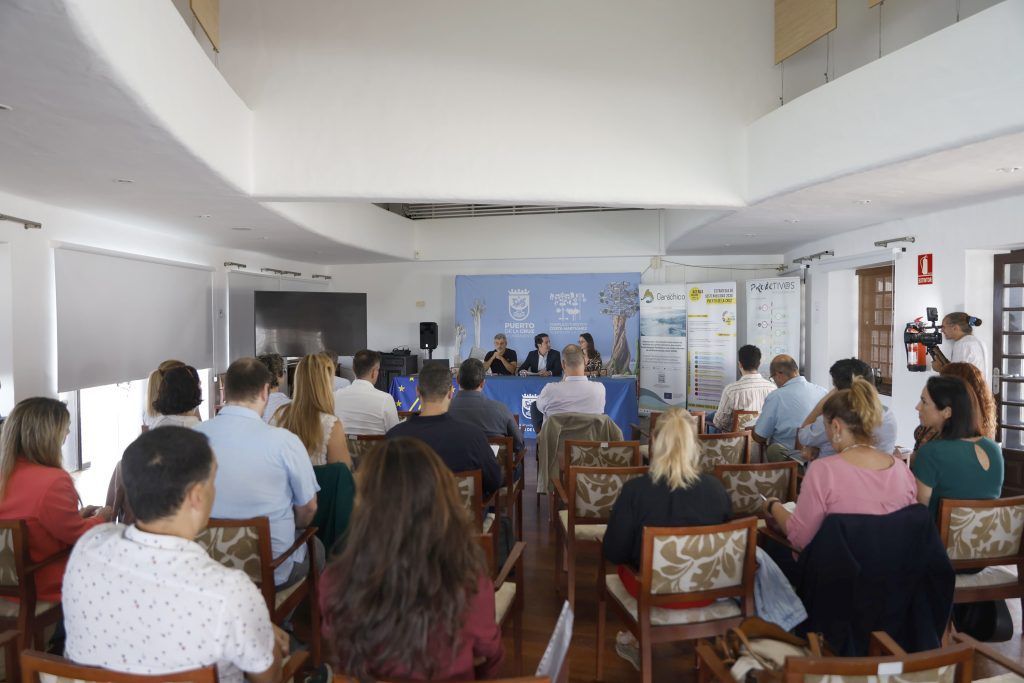
“From the Ministry of Ecological Transition and Energy we work on adaptation and mitigation measures against climate change, so that the Canary Islands suffer these situations as little as possible, and LIFE Garachico is creating an unparalleled network of knowledge to achieve that objective,” said Montañés. .
For his part, the Councilor for Sustainable City of the Puerto de la Cruz City Council, David Hernández (ACP), highlighted the importance of participating in this project “to undertake all the urban planning actions that are currently being carried out in the city but, above all, for future planning that takes into account the impact of climate change on the care of people and the sustainable urban development of the municipality.” For Hernández, “all this should be reflected along with the improvement of mobility and the renaturalization of spaces in the updating of the town's planning.”
El profesor Ángel Lobo Rodrigo, del Departamento de Disciplinas Jurídicas Básicas de la Universidad de La Laguna (ULL), abordó las «Competencias de las Administraciones Públicas frente a las amenazas en la zona costera por el cambio climático». Durante su intervención, expuso la complejidad de los procedimientos administrativos para la realización de obras en el espacio marítimo y la necesidad de clarificar las competencias de las distintas administraciones para adaptar las áreas urbanas costeras al cambio climático. Lobo Rodrigo se centró en escenarios prácticos para el manejo del riesgo de inundación en Garachico, ofreciendo perspectivas jurídicas sobre las soluciones propuestas.
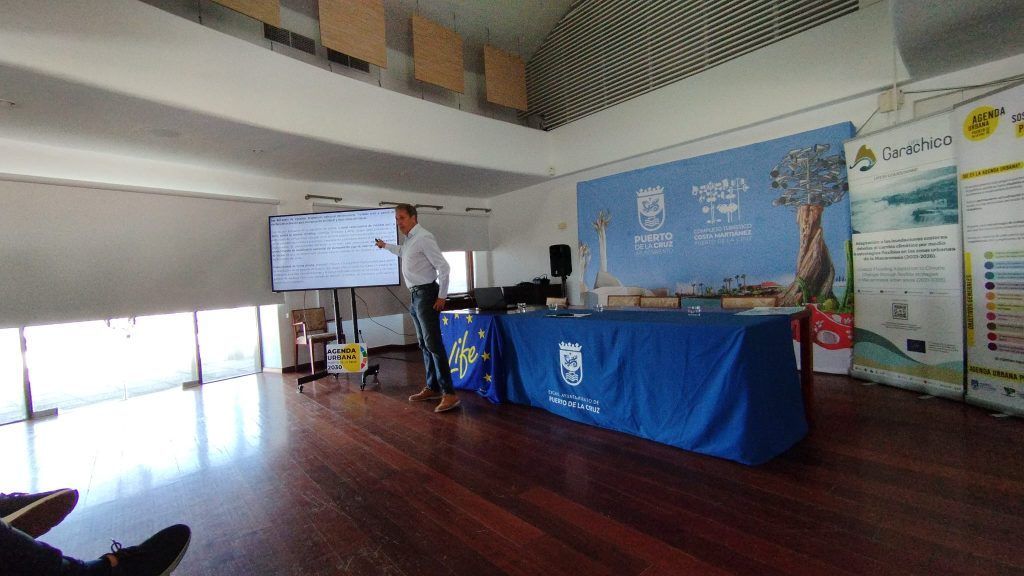
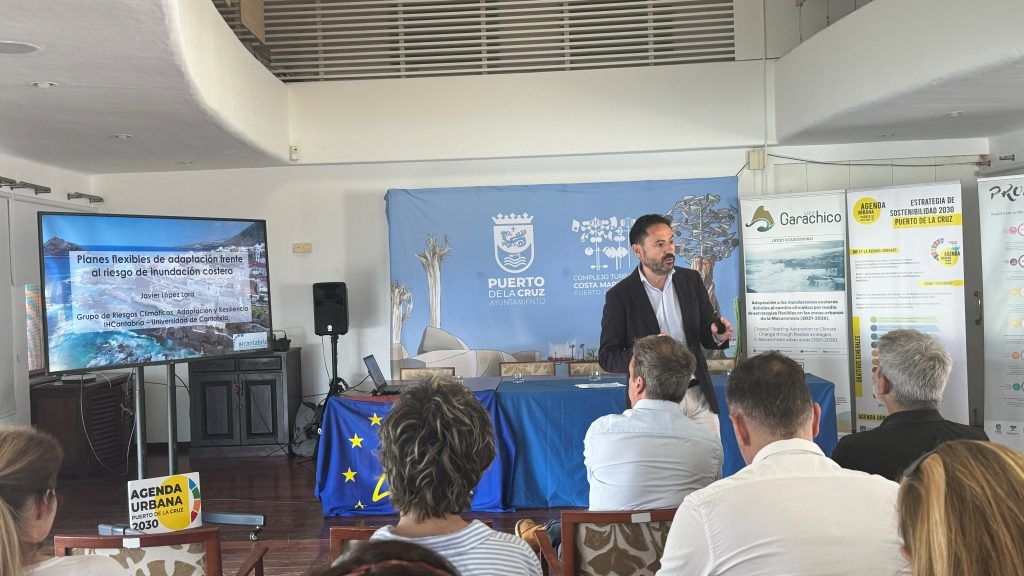
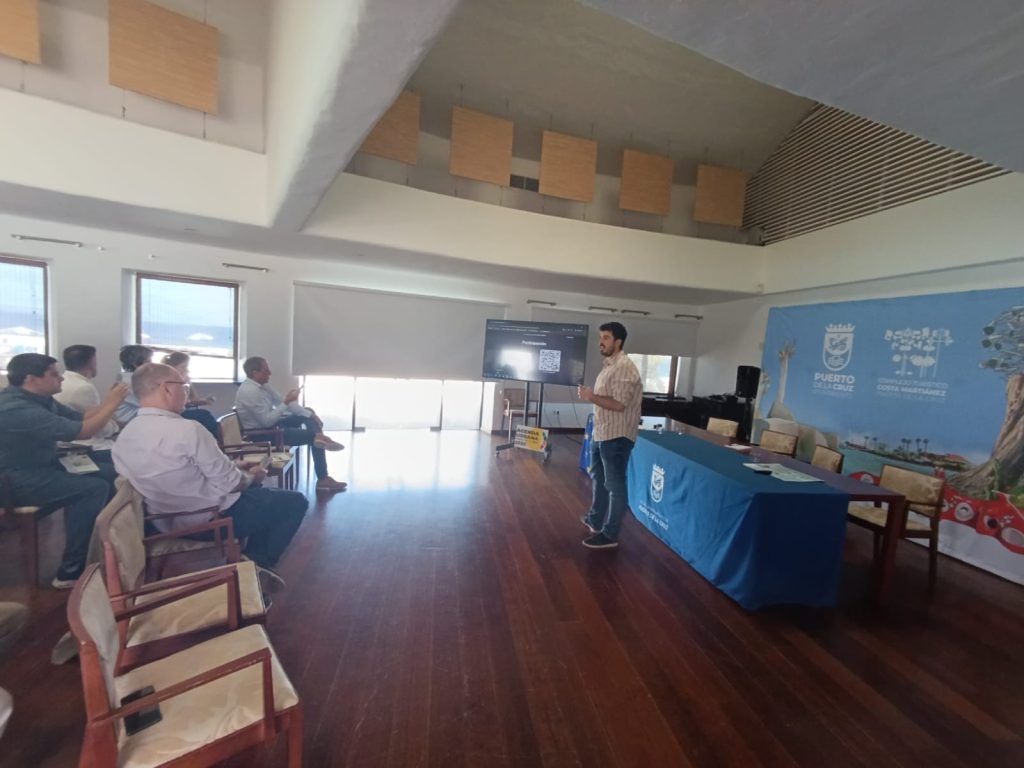
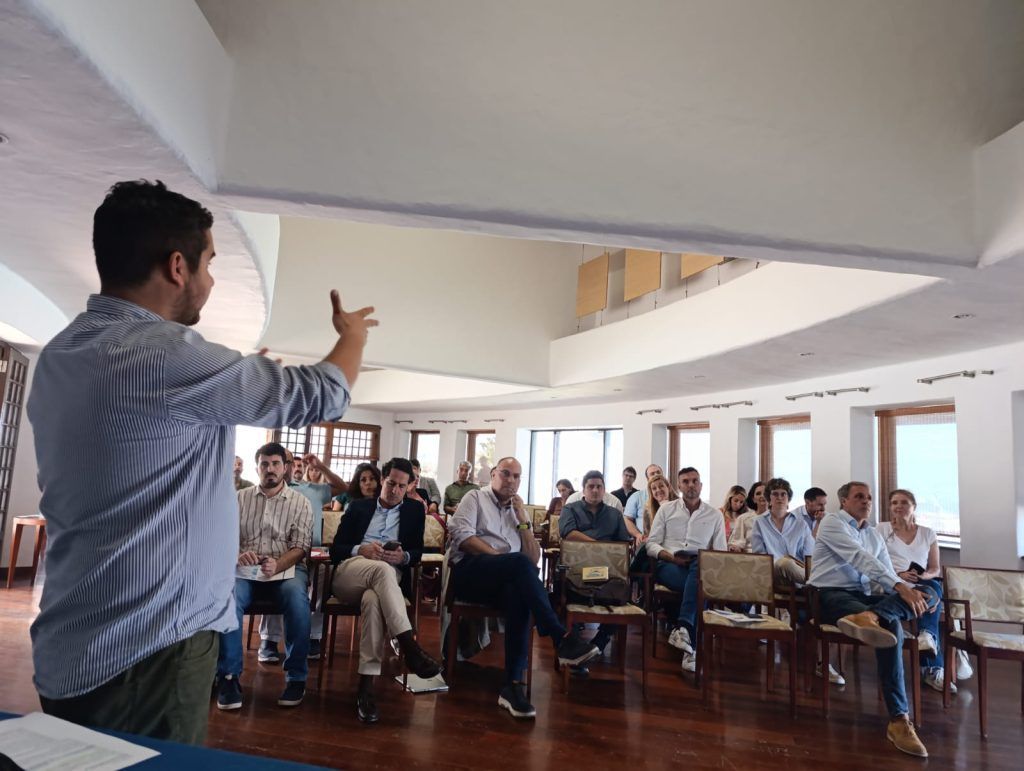
A continuación, Javier López Lara, Responsable del Grupo de Riesgos Climáticos, Adaptación y Resiliencia del IH Cantabria, presentó los «Planes flexibles de adaptación frente al riesgo de inundación costera». López Lara examinó las estrategias de adaptación rígida y propuso un marco estratégico de adaptación flexible que apoya a los gestores locales y regionales en la toma de decisiones basadas en niveles de riesgo aceptables y la implementación de medidas de seguimiento y monitoreo continuos, a través de la participación social activa.
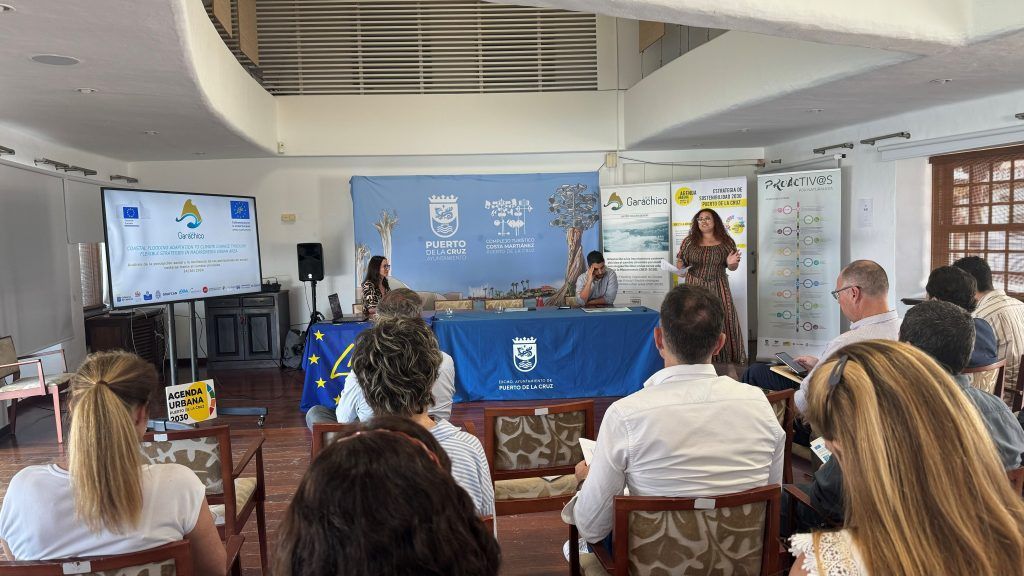
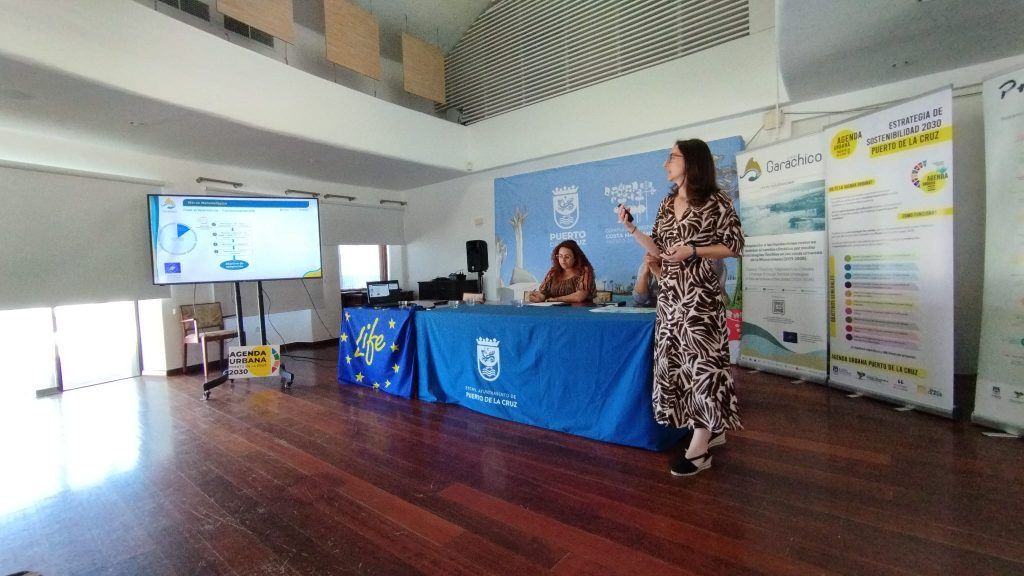
Laura Comes Aguilar, coordinadora técnica del proyecto LIFE Garachico en TRAGSA, expuso el «Marco Estratégico de Adaptación Flexible para zonas costeras urbanas inundables», presentando el MEAF desarrollado en el proyecto, diseñado para manejar los riesgos de inundación en zonas urbanas costeras. En su intervención, resaltó «la urgente necesidad de contar con estrategias de adaptación efectivas ante las inundaciones costeras por cambio climático en la región macaronésica». El proyecto, explicó, «generará herramientas y aplicará medidas efectivas para anticipar, preparar y mitigar los daños derivados por las inundaciones, incrementando la resiliencia de las comunidades costeras». Además, subrayó la importancia de la «colaboración entre múltiples partes interesadas» para afrontar el desafío de las inundaciones que sufren los territorios insulares.
La sesión prosiguió con un enfoque en la «Percepción social y la resiliencia de las poblaciones en zonas costeras frente al cambio climático», presentado por Josué Gutiérrez Barroso, profesor del Departamento de Sociología y Antropología, área de Sociología y Carla González Cruz, antropóloga social e investigadora de la Universidad de La Laguna. En sus intervenciones destacaron la importancia de la participación activa de la comunidad y la combinación de enfoques cuantitativos y cualitativos para entender y mejorar la capacidad de resiliencia de las comunidades costeras. También subrayaron la necesidad de estrategias sustentadas en un conocimiento científico sólido para asegurar la eficacia en la intervención con diferentes grupos sociales.
A pioneering project that focuses on adaptation to climate change
The LIFE Garachico project was launched in 2021, with 55% co-financing from the European Commission's LIFE program.
In 2024, the project is focused on validating the calibration of the early warning system for predicting flood events, drafting action protocols to respond to adverse meteorological phenomena and installing a series of measures to reduce the possible havoc caused by floods, such as the lowering of the road, the adaptation of the parking areas and the installation of anti-impact benches that reduce the energy and damage that the waves cause.
In addition, we will work in coordination with the General Directorate of Security and Emergencies and the CECOES to reduce action and response times once there is a flood risk alert.